Category: Blog

  • Hunting for Texture

    Hunting for Texture

    There are lots of days where I don’t really want to pick my camera up. At times, I just don’t feel like I have the energy to go out somewhere and try to find a new, unique subject to shoot and plan composition and angles. Maybe the lighting feels off, I’m in a place I’ve already shot several times before, or maybe I’m just not in the mood. One thing I like to do when I’m feeling a bit of creative block in my photography is to take a step back and do something with low stakes.

    Some time ago, I remember seeing a trend going around online called ‘texture hunting,’ where people would go around with a lump of clay, a kneaded eraser, or other similar moldable material. They find a surface with a lot of texture, like tree bark or exposed brick, press the clay onto it to create an imprint, then, using ink, would stamp the textures into a notebook. Seeing that trend got me thinking about just how many different textures and patterns exist around us everywhere we go.

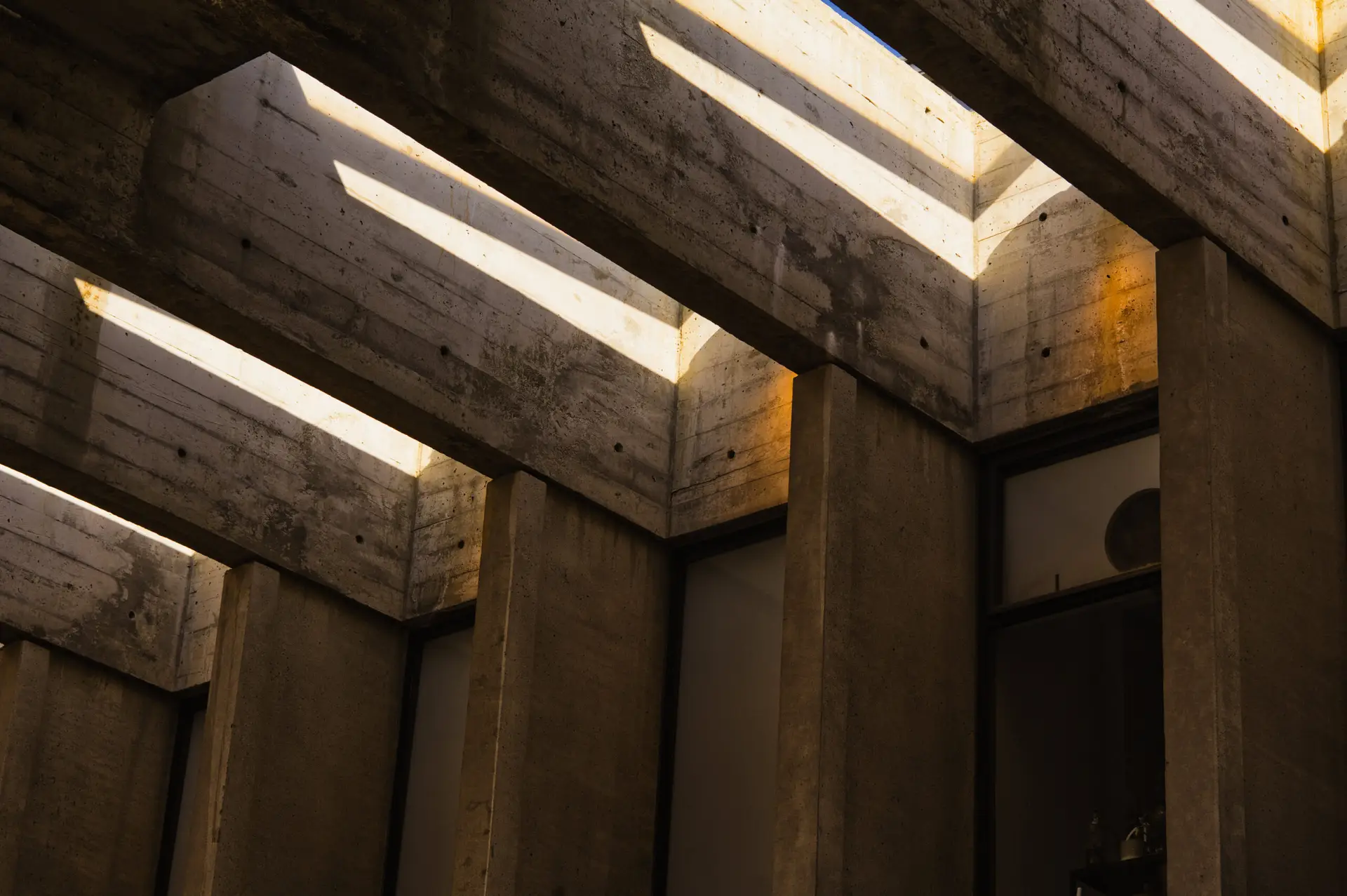
    Now texture photography is nothing new, but it’s something that I find to be really helpful in instances where the creative juices just aren’t flowing, and I feel like I have a slightly different approach than I’ve seen online. Often, texture photography, much like the online trend, focuses on small subjects and using macro lenses to bring out every tiny detail. I like to look a bit bigger. Instead of getting my camera close to a small object, I like to use a telephoto lens to bring a further object closer to me. With my camera, I can isolate one small section of a much larger subject, cropping out everything else, and creating ambiguous space. The tight framing can make it difficult to identify what exactly an object is, its size, and what angle it’s being shot from, forcing the viewer to instead focus solely on the lines and shapes that they can see.

    In my last post I talked a bit about the brutalist architecture of SFU’s Burnaby campus, which happens to be an excellent source of patterns. The straight, angular concrete creates plenty of bold shapes and, under the right lighting, incredible shadows. In some ways, it’s the perfect place to be when I’m feeling burnt out, because I can point my camera in practically any direction and find an interesting texture to shoot.

    Hunting for textures can be a lot of fun. It can take some of the stress and pressure out of photography, and is an easy way to get out and take photos even when I’m feeling unmotivated. The best part is that sometimes once I take that first step out the door with my camera, a wave of motivation hits me. Some of my favourite photos are from days where I wasn’t initially feeling up for it.

    At the end of the day, art should be fun. Your hobby should be something that you enjoy, and if some days you don’t feel up to a certain aspect of it, you can take a break from that part. A writer might set aside a big story to write something short, a painter might put down their oil paints to do a quick sketch, and I go out and shoot textures.

  • Finding Beauty in Brutalism

    Finding Beauty in Brutalism

    2–4 minutes

    There is a quote by the French painter Henri Matisse that I think about often:

    “There are always flowers for those who want to see them.”  

    There really is beauty everywhere if you are willing to look, and to me, that’s what photography is about. Many types of photography, architectural, nature, even portraiture, revolve around the core concept of drawing attention to and elevating things that are often overlooked and underappreciated. Photography is as much about creating art as it is about finding the art that already exists in the world. 

    When I go out, camera in hand, I don’t think to myself “Today, I am going to take a good picture,” I set out with the intention of exploring and finding something new, or perhaps seeing something familiar from a new perspective, or in a new light (sometimes literally, I love to see how the same area can look and feel entirely different depending on the weather/time of day). The way I see it, the world is only boring if you let it be, and few things demonstrate my belief as clearly as my school’s campus. 

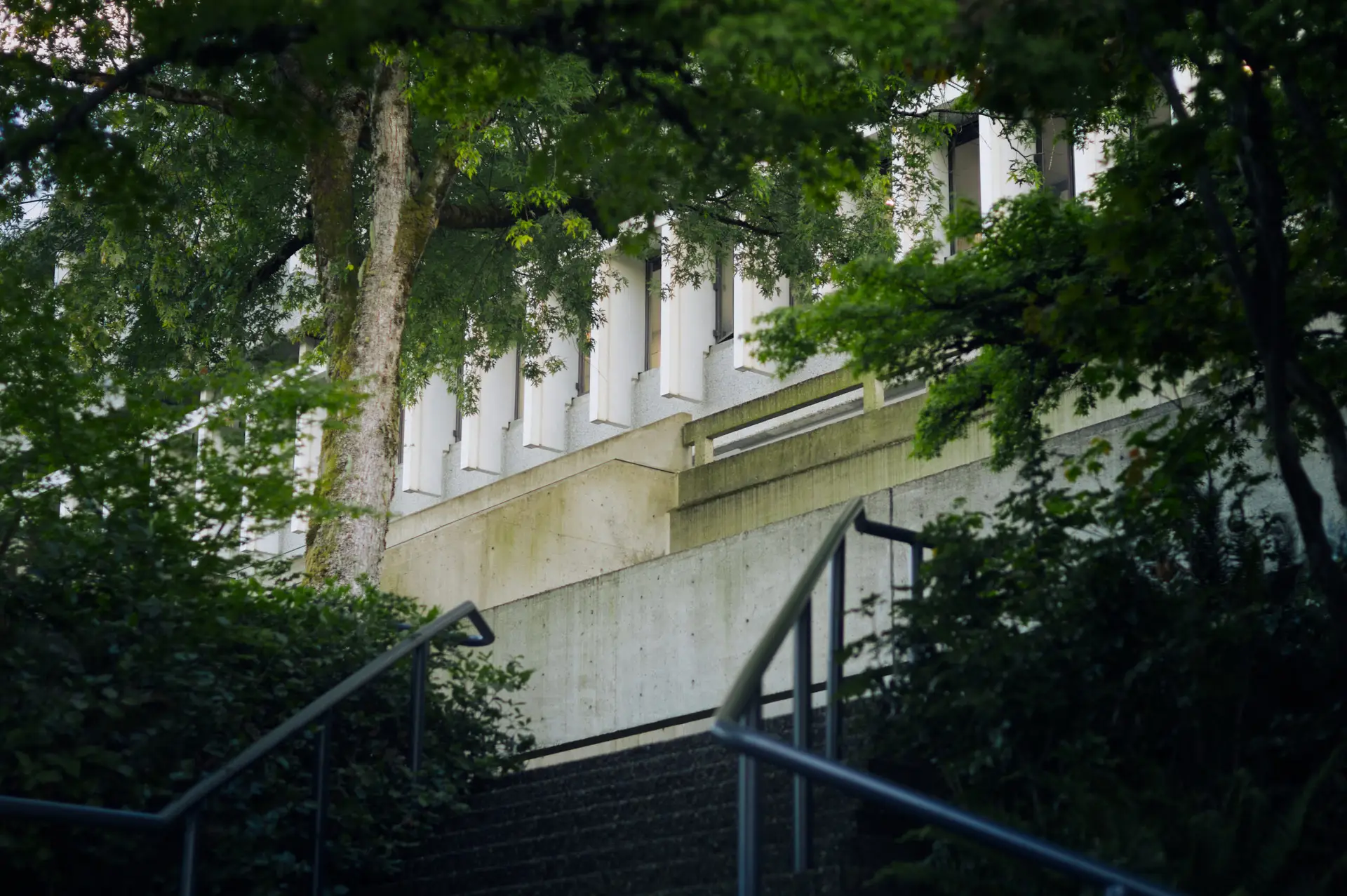
    Simon Fraser University is often called ugly and depressing, with some people going as far as to claim that it was designed as a prison (it wasn’t). Now I can appreciate that not everyone is a fan of the harsh lines and cold concrete of brutalist architecture, but the fact is that the designer, Arthur Erickson, is undeniably one of Canada’s most influential architects of all time. I could say a lot more about this, but that’s a topic/rant for another time.

    What I’m trying to say is that, from my point of view, SFU is beautiful. Is there a lot of plain grey concrete? Yes. Have multiple buildings on campus been used as set pieces for dystopian films? Yes. Have I personally shot a series of clips of the school on a foggy day and put Blade Runner music over it. YES. I won’t deny that at times, SFU’s Burnaby campus can feel quite utilitarian, but the issue is that some people can’t see past that.

    There have been days where I’ve walked across the campus to a lecture first thing in the morning and have noticed nothing but dull, lifeless concrete. However, I have also gone out and spent hours watching the koi fish in the pond, admired the vines on the side of the Bennett library that turn an incredible shade of red in autumn, and sat in the shade of the trees in front of the Dining Commons after bombing a unit test. I’ve brushed my fingers over the massive leaves of the monstera plants in the West Mall, walked through the mesozoic garden in the Shrum Science Center imagining plants that existed long before humans ever did, and slipped and fallen on the slopes of the grass pyramid in the middle of the AQ while taking a late night walk. 

    My point is that SFU isn’t just this slab of concrete slapped on top of a mountain, it’s an incredible blend of the natural world and human construction. You’ll walk across concrete for ten minutes, but turn your head in any direction, and odds are you’ll see a tree, a bush, or full planter box. If you walk around expecting to see a prison, then that’s the experience that you’ll have, but the truth is that the school is vibrant and full of life.

    All you need is the right perspective.

    -Tyler

  • A Trip to Lonsdale Quay

    A Trip to Lonsdale Quay

    2–3 minutes

    Earlier this month, as an optional “field trip,” I, along with several members of my film cohort, visited the Polygon Gallery in North Vancouver, to see an exhibition by the Canadian photographer Greg Girard. It was my first time visiting the gallery, and my first time across the harbour in years, with my last trip on the SeaBus likely being when I was still in middle school. Of course, as with most times I go somewhere “fresh,” I brought my camera along should inspiration strike, and strike it did.

    The exhibition was beautiful, and though it was my first time seeing his work, Girard’s photos–predominatly urban and street photography, with a blend of both local places, as well as cities across Asia–resonated deeply with me. In fact, as I write this, I’m looking over at two postcards featuring my favourite photos from the gallery that I picked up from the gift shop. I worked my way around the gallery, admiring the artwork, before following a few of my friends outside onto the building’s balcony, where I was greeted by a lovely view of the harbour, with the Vancouver skyline in the distance. 

    It was a perfect sunny day, so as the sun glimmered on the surface of the water and the boats bobbed up and down at the dock, out came my camera. There was lots to see from the balcony between the walkway below, the shops and spinning sign of Lonsdale Quay Market to my right, and The Shipyards to my left, so I took several shots of the area, and a few of myself in the reflection of the gallery’s windows (gotta get that profile photo).

    We spent a while longer in the gallery before our group decided to head out and explore the market, giving me a chance to find some more angles and new subjects as we wandered around. One of the main reasons that I love the ocean, and by extension most cities and spaces around it, is that everything feels so vibrant and lively, from the constant breeze blowing over the shore, to the boats cruising through the harbour, and the foot traffic along the boardwalk. After a summer at home in Kelowna, a clear, sunny day in Vancouver was–quite literally, considering the wildfires in the Okanagan–a breath of fresh air. 

    After picking up some food from the local shops, our group settled at a bench on the boardwalk and spent the next while chatting, with me occasionally stepping away to snap a few shots of seagulls or anything else that caught my eye. My friends told me that I looked like a “vacation dad” which, with my baseball cap, cross-body bag, and Pink Floyd shirt, I couldn’t dispute. 

    At the end of the day, I got to visit an art gallery and discover an inspirational photographer, catch up with my friends, take some nice photos, and enjoy some of the last days of summer.

    Not a bad way to kick off second year.

    -Tyler